You are on the verge of woman-hood at a time when the world feels like it is at a cross-roads. I hate that the news shows you the face of racism, genocide, and the climate crisis. I cried inside when you cried over what the Fast Track Bill means for te taiao. It is hard. You are moving out of childhood where things are simpler, where it is easy to see right and wrong, like the child on the video said “that is not right and I am just a kid…”. The world will become less black and white, with many people advocating their particular shade of grey, and some of those people are so loud. Unfortunately, part of leaving childhood is that you have to become critical, even to the assumptions you see me making, and you have to become an active player in the game of life around you.
Recently we have been doing our own school work side by side, and some together like the RNZ history show, and forever the news. My work is making me think about our place in this beautiful (I can not find the right word) country we share. I have been thinking about my role as your mother and teacher.
When you were little, when I asked you who you were, you always defined your self as a human, and then located yourself in space; planet earth, New Zealand, right down to where you were standing. Now you are starting to really listen to the news and look over the shoulders of your odd little family with it’s unconventional ideas out into the wider world.
It has been hard homeschooling in our little world sometimes, especially for me trying to practice a democratic style of ako; trusting you to choose what to learn, and to teach me how to help you. I was brought up being told what to learn. So, How I can help you to feel like you belong outside the arms of friends and family? How can I help you reconcile being born pākehā in a Māori country? How do I help you with being able to say “I am tangata Tiriti”?
You were born in Wellington, like your mother and her mother and your great grandmother. That makes you pākehā. You can not become Māori. But being born here, and loving this place as I know you do gives you and I an obligation to become tangata Tiriti. Our ancestors made the treaty but missed out on an opportunity to make New Zealand become Aotearoa. I want us to help this country to be better, kinder. We have to decolonise ourselves. I know history is not your favorite thing, but it is in everything we do. Our ancestors stole and lied to Māori. Māori have a lower life expectancy than pākehā. There is a higher proportion of Māori in jail. These things are not alright. Same as, it is not right that pākehā are still lying and cheating. Together, you and I will have to look into the face of historical tragedies, and we can not, should not, turn our faces to these things even if they hurt. This is how we learn and make sure such things never happen again. We have to do this because it is hard to maintain a sense of pride in oneself if one is in the role of an oppressor. As Dick Scott said “good relations between people are not fostered by suppression”.
Do you remember how we both saw Steele after he started in an Māori immersion class, how he stood straighter? That is what we want. If everyone can stand taller we are successful. We couldn’t make that change in Steele but we can make an environment where he and his sisters can succeed as Māori. You will need to understand that there are places you can’t go and that is okay, it is not exclusion. To help make a place where our Māori friends can succeed as Māori we have to learn more, listen better, hear what is being said, not cover other’s feelings. We need to work in partnership. It is our job to see into the Māori world and take on ideas, so we can co-exist together, we can have conversations with a mutral understanding. Māori heroes can be our heroes. We can no longer rely on the old dogma that we are the civilised discoverers (I hear you laugh) to rid of us of our cognitive dissonance. I want us to be ready for the world we want. For you to be able to stand tall and straight and sure in your place like a totara that bends in storms but stays knowing that they have roots in the land that you will fight to protect from inequity and the ravages of neoliberalism and capitalism.
When you loose hope, and you will, remember that Christmas we had at our cousin Val’s and your Great-aunt Yvonne make some comment about there being too much te reo on the radio and Val said “you are just racist mum”. There were Val and I having to relearn after the terrible pronunciation of te reo in our youth, there was her son Tarryn who didn’t need to re-learn, noticed the te reo on the radio and felt the responsibility was on him to learn it, and there was you the kākano of the next generation where you will understand and be actively responsible, where you will get to appreciate the imagery of te reo in the same way you do that Shakespeare you love and you will teach me too.
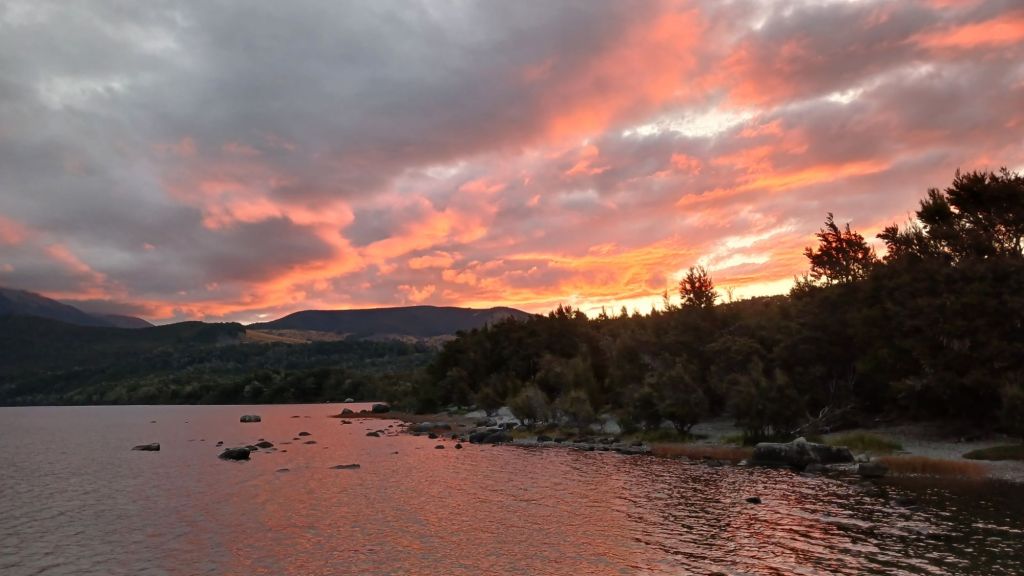
Every now and then I look up from the words that I am reading and writing and see lake Rotoiti, smell the beech trees, listen to the korimako, and watch the toutouwai getting the namu attracted to what I think of as my Kiwi shoes. I can see the scars on Porangahau that settlers made before they understood this land, and the welcome swallows who have made there way here and look so comfortable in their own skin and I am reminded that the earth is our mother whether we call her Danu, Papatūānuku or need the Gaia theory to feel this and we honor her by being her voice. Well done on your first submission my love.
I have chosen to respond to this assignment as a letter to my 12 year old pakeha daughter on becoming tangata tiriti. She is home schooled (her choice). I felt a letter is a practical and tangible response to my thoughts about the influence of the readings on my one full time student.
A lot of thinking about ‘my story’ in education has just reminded me how strange my upbringing was, or maybe it was just me the person that was odd. I had not thought about my years of not fitting in for a long time and although I do not believe that I cared at the time I do feel sorry for the child that I was, and this did influence my acceptance of my child’s desire to be home schooled.
I have found the readings I have done interesting and I have possibly gone down the wrong rabbit hole as I became interested in the idea of belonging and what it means to be pakeha, as compared to tangata tiriti and what decolonising means. “Decolonisation includes the revaluation of the political, social, economic and judicial structures themselves, and the development, if appropriate, of new structures which can hold and house the values and aspirations of the colonised people.” Laenui in the ‘Process of Decolonisation’ page 155. This fits in with the Rangatiratanga/joint/Kawanatanga spheres of He-Puapua. This excites me as it is more than just a fiddling around the edges. I did have a moment of questioning my motives as just wanting an overthrow of capitalism.. don’t forget that in 1958 Iraq citizens over threw the British initiated kingdom and became a rebublic that was worse for it’s citizens. What exists now is so obviously broken, the statistics relating to Māori outcomes in education and health are a travesty, let alone the effects of the high incarceration and the effects that has on families. That this is a result colonisation, and I have reaped benefits from this makes me personally feel I need to be active in change, it is not enough to repent. It is pakeha that have to start to decolonise ourselves. I confess I have been slumbering in Pakeha paralysis (Alex Hotere-Barnes – he took his wifes name x) land.. It is not possible to confine these ideas to just education – see the Change factors, Smith (2005) where he says mediating socioeconomic and home difficulties (the first two layers of Maslow’s hierarchy of needs), or the Montessori Fundamental needs.
After Physiological needs and safety the next Maslow layer is belonging, I do not subscribe to this model as a literal truth, humans and their need for linear models, boxes, however it does emphasise belonging. I wanted to look into stories unlike my own so I have been reading Growing Up Māori. Maggie Hohepa talked about how Māori never hit their children. It is the “spare the rod, spoil the child” brigade that introduced that meme. It seems archaic but it was only 2007 that “reasonable force” was removed from legal defence (so not civilised). Many of the stories in Growing Up Māori were these stories of belonging. The importance of having that iron core of cultural life. The love that everyone talks about their parents. I want to make sure that my daughter (student) has this and that it reflects Aotearoa and tiriti.
As a practical person I am going to tell you my “do bits”. I find the words interesting but I like action! I ‘teach’ at Everyone Out, 30 kids, 5-13 years old at an outdoor, play based programme. Starting with the idea of we are but a mish mash of stories that change over time, I started noticing the stories that I tell. I tell them as a way of relating to children a little nugget of advice, with me being the one who needs the advice as I am still learning – for example: go to the toilet when you need to, as needing to wee leads to some dodgy choices. I use a story of my own, where I broke my wrist. The telling of this personal story usually has children transfixed. I get asked to tell it, I make it funny, and in sharing I notice that the children like to tell me stories back. I am making a conscious effort to tell children (as a way to remind them what they can do) stories with them as the protagonist succeeding – “Remember that time so n so were having an argument and you though of a way they could make it work and you went off and all played bases”. I am using stories of the kids to help them manage the conflict they go out of their way to create.
However I have heard my self embellish stories about my self to make them more story like. What about the lies we tell ourselves? I shared a history with my sister but the stories she tells I do not recognise, did I sugar coat it or is she bitter? Does this legitimise the concept of people having their own truths?
I have been reading counter narratives about education for some time, Peter Grey, John Dewey, Maria Montessori among others. All my experiences have led me to believe children are fully formed beings and to tell them what they should learn is to deny them the choice of what is important to them. I wonder if democratic education would fit in a kaupapa Māori model? A multi age cohort would. I see this work every day at Everyone Out. The age range means we give the kids chances to be both the expert and the novice, no one feels that they don’t have something to offer. It is so much easier to teach, lets the kids experience mātauranga Māori when you are outside in the bush, it just makes sense, it also gives the kids feelings about place, they name the parts and make them their own. Like Tane Houston – ranger Mt Taranaki says “we bring kids in and we just expose them to this space. We don’t really do much talking. We just let the forest talk for itself.”
Growing up Māori, editied by Witi Ihimaera
Imagining Decolonisation BWB Texts
Becoming Pākehā John Bluck
Healing our history Robert and Joanna Consedine (not finished)
Keeping track of what I read I can see is something I need to work on….
 Anne Bieleski Portfolio
Leave a comment